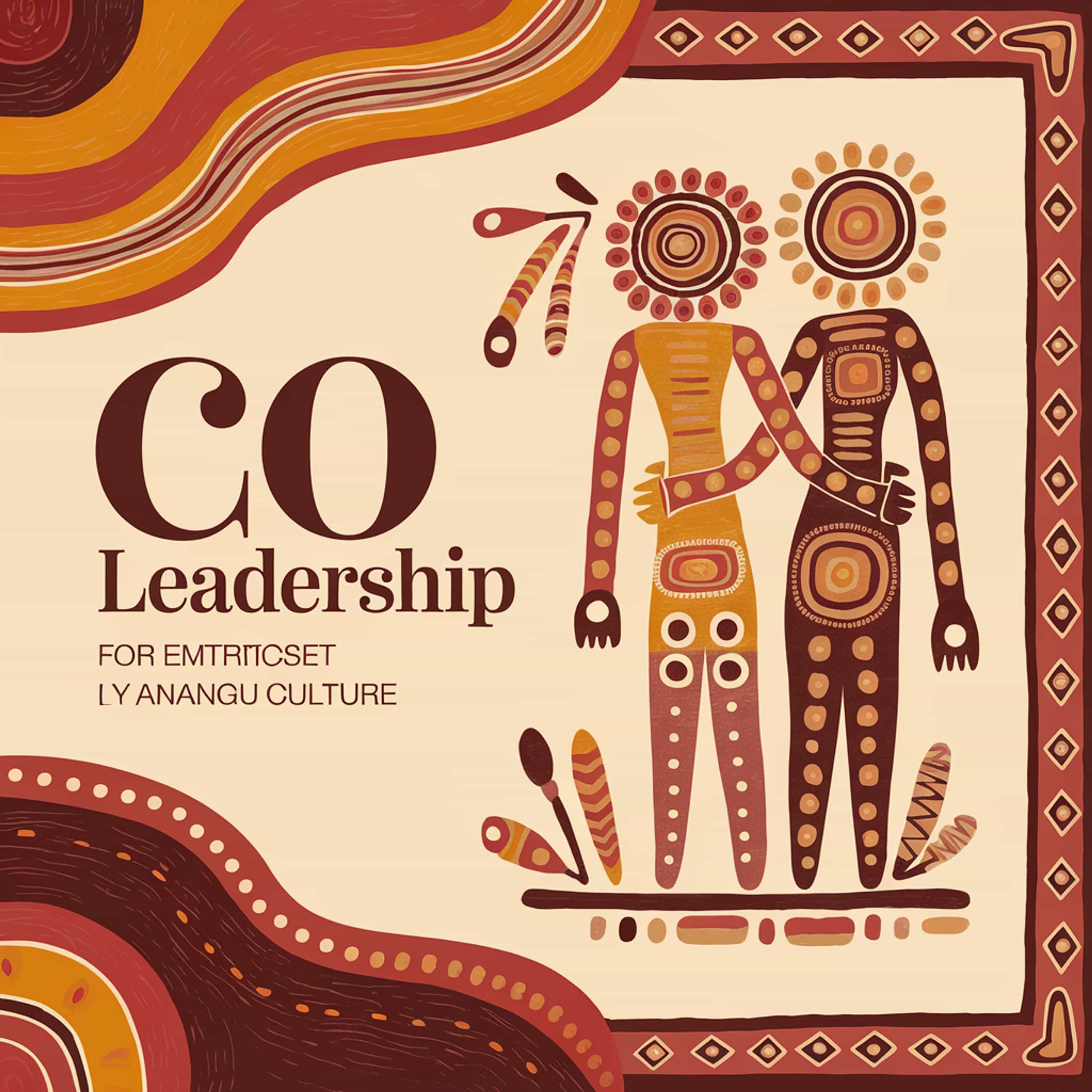
Co-Leadership in Anangu Lands
Explore the transformative power of co-leadership in Anangu Lands Schools with Evelyn Carter and Liam Warragul. Delve into culturally responsive practices and strategic frameworks that support sustainable leadership and thriving community engagement.
This show was created with Jellypod, the AI Podcast Studio. Create your own podcast with Jellypod today.
Get StartedIs this your podcast and want to remove this banner? Click here.
Chapter 1
Enhancing Leadership Capacity in Anangu Lands
Liam Warragul
Welcome to Leading for Impact in Anangu Lands Schools. I’m Liam……
Evelyn Carter
and I’m Evelyn. We’re your hosts for this series created especially for school leaders working in the A.P.Y. Lands—where principals and Anangu coordinators walk side by side in leadership.
Evelyn Carter
This podcast is all about supporting that co-leadership. Each episode is short—around ten minutes—and focuses on a key aspect of leading in a remote Aboriginal school. We’ll explore real stories, practical ideas, and examples of what strong leadership looks like when it’s built on cultural responsiveness and shared authority.
Evelyn Carter
You’ll hear about everything from building school culture and bilingual education to growing Anangu leadership, navigating protocols, and partnering with community. But more than that, this series aims to open up important conversations—ones that can help you and your leadership team reflect, plan, and grow together.
Liam Warragul
And that’s a big part of how this podcast can be used. These episodes aren’t formal training—they’re conversation starters. You might choose to listen together as a leadership team once a week, and then take five minutes to yarn about what stood out, what’s working well, or what could be done differently at your site.
Evelyn Carter
Co-leadership of schools in an Anangu setting is very different to leadership in a mainstream setting.
Evelyn Carter
Yes, and the fact is that each of the ten schools across the partnership is also very unique in it's own way, with it's own complexities, needs and culture
Liam Warragul
It's a challenge, yeah, because leading in such an environment isn't about fitting one model to every school. It's about adaptability—and respecting the community's cultural framework.
Evelyn Carter
That's right! And, of course, that's where the PYEC Committee and the Department of Education's strategy come in as our guideposts.
Liam Warragul
You know, Evelyn, P.Y.E.C. is such a great example of co-leadership in action. It's not just a committee—it’s like a bridge. They make sure that the schools' decisions are grounded in Anangu perspectives. That's crucial.
Evelyn Carter
Totally. And I I love how it’s not just about checking boxes, but actually embedding those perspectives into the entire leadership framework... The Anangu co-ordinator and principal really do need to work together as a team in every aspect of school leadership.
Liam Warragul
Yeah. But let me share a story from a few years ago when I was working leading in a remote Aboriginal school. We started this co-leadership initiative between local elders and school leadership. At first, it was rocky. I mean, two completely different leadership styles clashing is kind of expected, right?
Evelyn Carter
Oh, of course. That's where the growth grows. Stumbles and all.
Liam Warragul
Right. But here's the thing—when we shifted to shared responsibility, letting the local elders guide decisions on cultural matters and the school team focusing on broader logistics, things clicked. Suddenly, classrooms were more inclusive, parents became more involved, and attendance rates started climbing.
Evelyn Carter
Amazing. And that’s kinda the magic of the co-leadership model, isn’t it? I bet the success there wasn’t despite the community’s differences, but because of them.
Liam Warragul
That's absolutely correct. It’s why the shared P.Y.E.C. and DfE leadership principles resonate here. The focus on collaboration and community-driven change aligns beautifully with—
Evelyn Carter
—with what Anangu communities value. Yes, I was just thinking the same. Like how these shared principles encourage and empower local voices rather than dictating outcomes.
Liam Warragul
Absolutely. It's about creating space for the Anangu co-ordinator to lead with you, not under you. That approach fits so seamlessly with the cultural strengths of Anangu families.
Evelyn Carter
And it shows that leadership isn’t just about authority—it’s about connection, trust, and understanding the broader picture, doesn’t it? It's about investing the time and energy in building stronger connections which lead to improved teaching and learning.
Liam Warragul
Completely. It's about walking alongside each other! When those elements are in place, meaningful change becomes more than just an aspiration. It has an opportunity to become a reality.
Chapter 2
Culturally Responsive Practices
Liam Warragul
And that brings us back to culturally responsive leadership. It’s about truly meeting the community where they are—honoring their traditions, values, and the unique ways of learning that help define Anangu culture.
Evelyn Carter
I love that. And it reminds me of this class I ran in Adelaide—not quite the Anangu Lands, of course, but a diverse mix of students from all over. We had kids bringing in stories from their cultures, and one day, I thought, let’s let's build lessons around those stories. The engagement skyrocketed. Made me think, why don’t we do this more often?
Liam Warragul
That’s such a great example, Evelyn. Stories have this power—they connect us. And in Anangu classrooms, storytelling isn’t just education—it’s cultural preservation. It’s passing down knowledge, values…identity.
Evelyn Carter
Exactly! And, like, when you center education around those stories, it’s not just students who feel seen—it pulls families and communities into the learning process too. It brings cultural learning to the classroom and helps Anangu students to strengthen their cultural understanding and identity and this leads to a greater self-esteem as an individual and as a learner.
Liam Warragul
Absolutely. Co-leadership emphasizes exactly that connection. It isn’t just about academics; it’s about cultural and emotional well-being too. Because thriving, in this sense, has to be holistic.
Evelyn Carter
Right. But here’s my question: how do you balance traditional approaches like storytelling with, you know, modern curriculum pressures?
Liam Warragul
Ah, and that’s where true co-leadership comes in. It’s about collaboration, shared responsibility. You develop leadership models where the Anangu co-ordinator and Anangu Educators guide cultural practices, while classroom teachers focus on curriculum goals. The trick is aligning those, so one supports the other, instead of competing.
Evelyn Carter
Got it. And, when that alignment clicks, it’s like magic.
Liam Warragul
Exactly. When co-leadership is done right, the results are profound. Schools transform into places that reflect and celebrate the communities they serve, and education becomes something the whole community takes pride in.
Evelyn Carter
And honestly, isn’t that kind of the dream? Building schools that don’t just teach, but also connect, celebrate, and empower?
Liam Warragul
It really is. And it’s why the alignment of the P.Y.E.C. and DfE improvement agenda is so critical - it sets a plan that co-leaders can collaboratively implement and support at the site level.
Chapter 3
The Journey Towards Sustainable Leadership
Evelyn Carter
Speaking of authentic responsiveness, Liam, that makes me think—when it comes to structured site learning plans, it’s not just about ticking boxes, right? There’s got to be something deeper to truly make an impact.
Liam Warragul
Yes! And, you know, Evelyn, it’s that idea of building leadership stage by stage—prioritizing inclusivity, safety, and collaboration at every step—that really makes the difference. It’s like constructing a house; you start with the strongest foundation you can manage.
Evelyn Carter
Totally! And when you think about inclusivity in schools, especially in Anangu Lands, it’s not just theoretical. It’s cultural safety, it’s connection, it’s…what? That real sense of belonging for everyone involved?
Liam Warragul
Yes. Take, for instance, the statewide consultations that the Department has undertaken. They prove that leadership doesn’t happen in isolation. When you listen to families, educators, and the students themselves, you’re creating a system that’s not just responsive but alive, you know?
Evelyn Carter
Yes! That alive factor—community-driven, constantly evolving. And it’s like the framework itself learns along the way. I I just love that. But you had a story that ties into this, yeah?
Liam Warragul
I do. So, there was this school where we introduced what we call a collective responsibility model. Instead of one leader trying to carry everything, we created a system where elders, co-ordinators, teachers, and even students had defined roles in decision-making and leading the work. It focused on the concept of Crew. There was a clear expectation that everyone had a role to play in the improvement journey and there were no passengers!
Evelyn Carter
Ooh, was it smooth sailing from the get-go, or...?
Liam Warragul
Ha, not at all. At first, it was messy. I mean, imagine trying to align a dozen different perspectives, all with their own priorities. But, little by little, it started working. When the elders’ input shaped cultural protocols, and teachers merged those with educational goals, the impact was stunning. Attendance improved; engagement shot through the roof.
Evelyn Carter
Honestly, that just reinforces what we’ve been saying, doesn’t it? A connected learning environment isn’t a “nice to have”—it’s the core to everything thriving. And when everyone’s voice is heard, especially in culturally rich areas, well, magic happens.
Liam Warragul
Yeah, and that’s the mission, ultimately. It’s this commitment to co-learning, to embracing community as a partner, not just a stakeholder. That’s how sustainable co-leadership is born and nurtured.
Liam Warragul
Ultimately Evelyn, effective leadership is all about taking the time to focus on building relationships... listening deeply.
Evelyn Carter
Exactly. And honestly, Liam, I love how this whole episode just keeps coming back to one word: connection. Whether it’s connection to culture, to people, or even to the big picture—it’s all tied together, isn’t it?
Liam Warragul
It really is. Leadership thrives in those connections. And when schools in the Anangu Lands embrace co-leadership, they’re not just educating—they’re empowering communities, preserving culture, and enabling futures. That’s what impact looks like.
Evelyn Carter
Couldn’t have said it better myself. Well, folks, on that note, that’s all for today. Such a rich conversation, Liam—it’s always a pleasure.
Evelyn Carter
Now as we wrap up this first episode of Leading for Impact in Anangu Lands Schools, I'd like to leave you with this question... As a leadership team, how effectively do you feel you are working together as a team and how might you be able to strengthen your connection as a team.
Liam Warragul
Thanks very much Evelyn. And to everyone listening, thanks for joining us. Here’s to creating leadership that truly makes a difference.